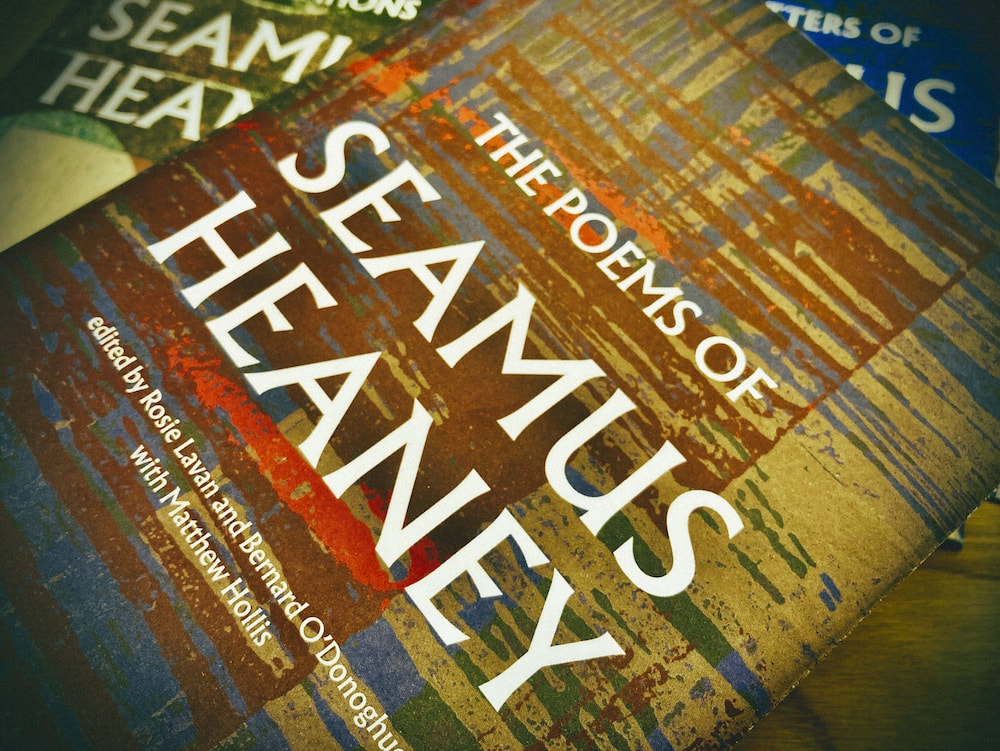
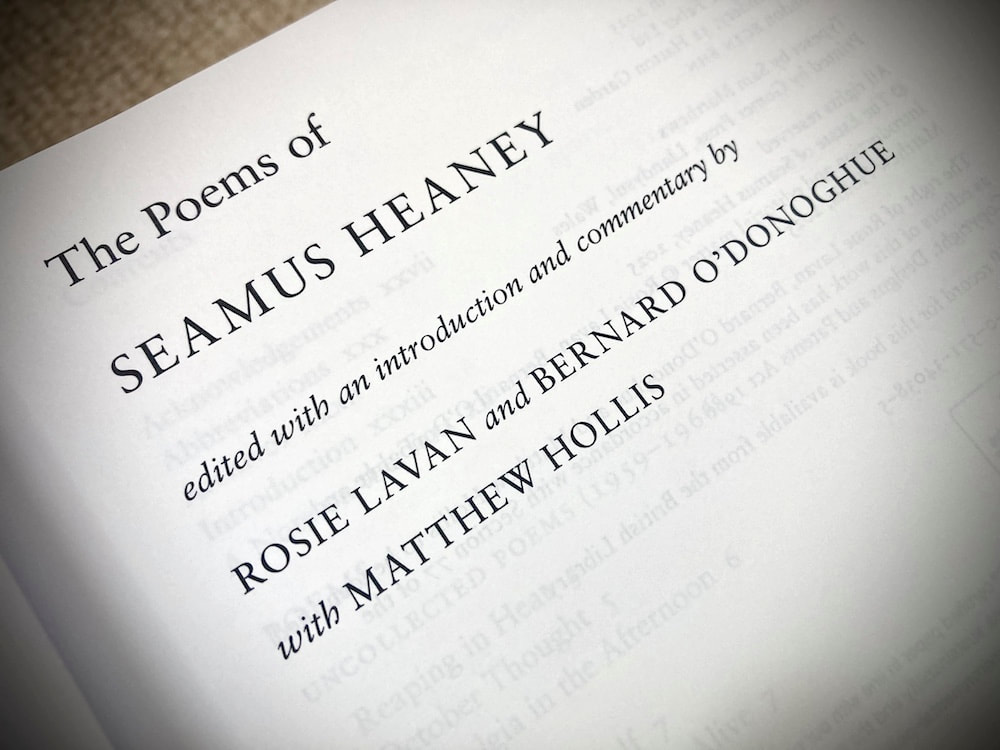
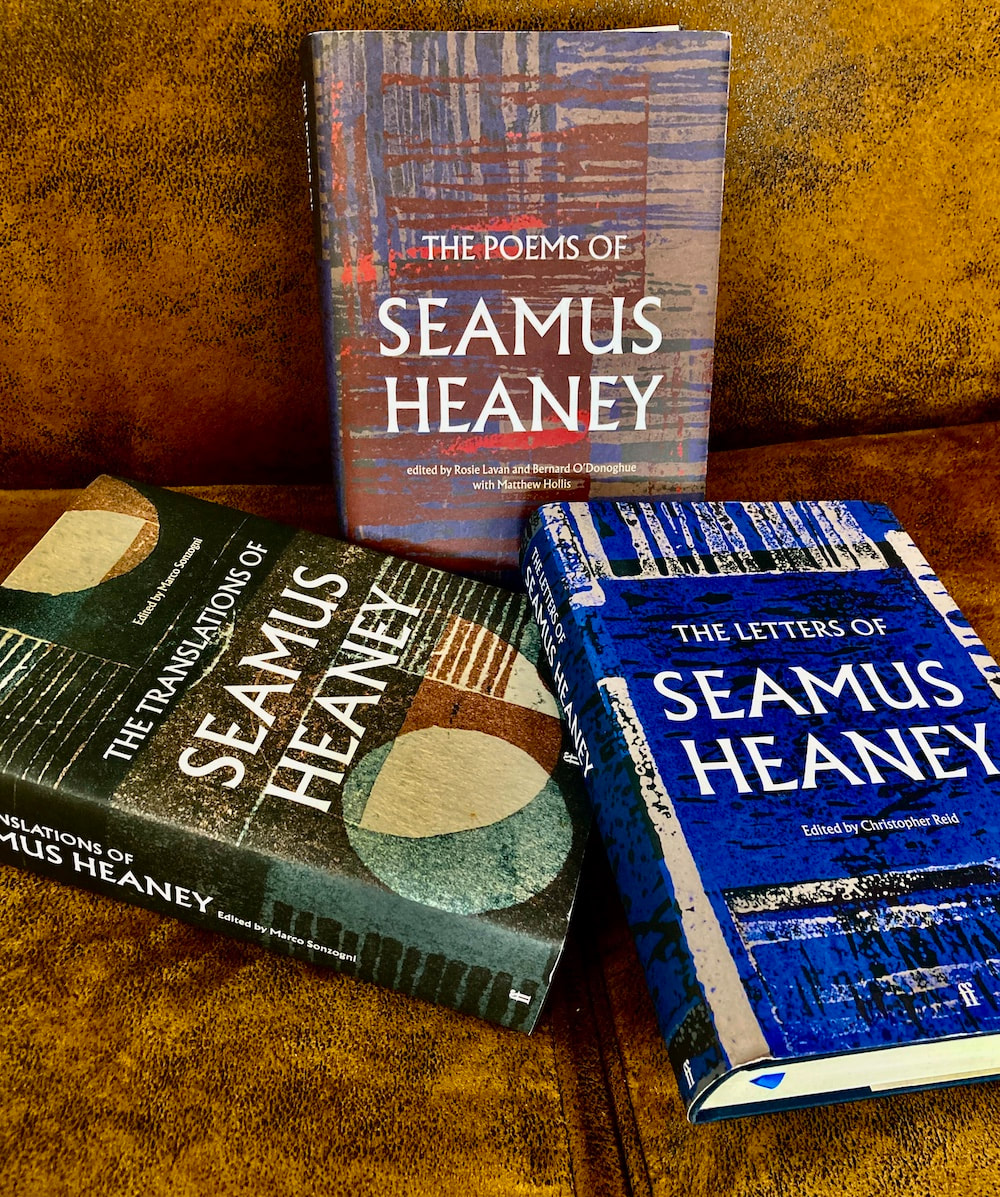
The Poems of Seamus Heaney
Edited by Rosie Lavan & Bernard O'Donoghue with Matthew Hollis
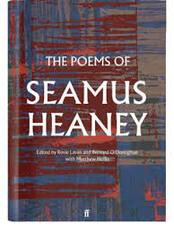
Faber & Faber
Hardback, 1296pp., 9780571340385 (9 October 2025) Ebook, 978-0571340408 (7 October 2025) |
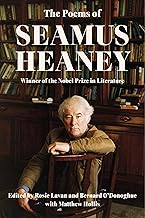
Farrar, Strauss & Giroux
Hardback, 1296pp., 9780374235239 (18 November 2025) |
Times Literary Supplement Books of the Year
Observer Best Books of the Year
Irish Times Books of the Year
Financial Times Best Books of the Year
New Statesman Books of the Year
Big Issue Best Books of the Year
Telegraph Greatest Books of the Year
Telegraph Best Poetry Books of the Year
Guardian Best Poetry Books of the Year
Observer Best Books of the Year
Irish Times Books of the Year
Financial Times Best Books of the Year
New Statesman Books of the Year
Big Issue Best Books of the Year
Telegraph Greatest Books of the Year
Telegraph Best Poetry Books of the Year
Guardian Best Poetry Books of the Year
This is the long-awaited, definitive edition of Seamus Heaney's poetry. It encompasses all the poems Heaney published in his lifetime as well as the small number that appeared after his death: twelve single volumes, from Death of a Naturalist (1966) to Human Chain (2010), and those poems published in pamphlets, journals and magazines or with limited circulation. In addition, the book includes a selection of unpublished material chosen by the poet's family.
It is a body of work that, in its entirety, resounds with the 'lyrical beauty and ethical depth' cited by the Nobel committee: poems 'which exalt everyday miracles and the living past.'
Critical introductions to each collection and notes that illuminate the history and development of the poems make this the essential volume for admirers of Heaney's work.
It is a body of work that, in its entirety, resounds with the 'lyrical beauty and ethical depth' cited by the Nobel committee: poems 'which exalt everyday miracles and the living past.'
Critical introductions to each collection and notes that illuminate the history and development of the poems make this the essential volume for admirers of Heaney's work.
Bookshop.
Publisher (UK/Ire) | Publisher (US) | Alibris | Amazon UK | Blackwell's | Bookshop | Hive | London Review Bookshop | Poetry Book Society | Waterstones | WH Smith | Wordery
Media.
Reviews.
‘The editors have performed a Herculean task in organizing and contextualizing the work. Combining impressive authority with delicacy of touch, they draw out the themes that echo through the dozen volumes published with Faber and plumb deeply into a wealth of uncollected and unpublished work. . . . This edition brings us into the heart of Seamus Heaney’s own sanctum and shows the immense work as well as the inspiration behind the indisputably, miraculously “real thing” he has left to us.’
– Roy Foster, Times Literary Supplement
'The glorious gathering-in of his achievement that is The Poems of Seamus Heaney, edited with meticulous care and luminous clarity . . . allows us for the first time to see his dozen formal collections as only the most visible peaks in a constantly rolling range of creativity.'
– Fintan O'Toole, Observer
‘This year, and for decades, hopefully centuries, to come, the whole literary world will feel grateful to [Bernard O'Donoghue] and his co-editors, Rosie Lavan and Matthew Hollis, for The Poems of Seamus Heaney (Faber), a magisterial edition of Heaney’s collected and uncollected poems.’
- Ruth Scurr, TLS Books of the Year
'This book is a landmark . . . [and] lets us see Heaney's work, whose ripples we are still learning to navigate, for the colossal achievement it is, and it reminds us that Heaney is not only a keeper but an enricher of the word-hoard.'
– Philip Terry, Guardian
'The Poems of Seamus Heaney amplifies a reader's understanding of the poet's accomplishment by putting the meticulous grandeur of each book into the context of uncollected and unpublished poems, many of them excellent and all illuminating. With a lucid, chronological format for the Contents page, the volume's editors invite readers to sample the honourable outtakes and preliminaries, the range-finding preparatory studies, that underlie for instance the haunted vision of "North" (1975) or the magisterial yet intimate scope of "Station Island" (1984).'
– Robert Pinsky, New York Times
'A decade in the making, this 1,300-page brick is the first of its kind – a “definitive” collection of the Nobel-winner’s oeuvre, featuring some never-before-seen verses. There’s plenty of sex, guilt and, fascinatingly, status-anxiety: it seems that “Seamus Feamus” was conflicted about fame from the outset.'
– Telegraph, Greatest Books of the Year
‘Last things last: The Poems of Seamus Heaney (Faber) is the book that Heaney’s admirers have been waiting to read since his much-lamented death in 2013, and it lives up to every expectation – it’s beautifully produced, and learnedly but not intrusively edited by Rosie Lavan, Bernard O’Donoghue and Matthew Hollis.’
- Andrew Motion, TLS Books of the Year
‘For Irish readers, Heaney remains a touchstone. The rural boy made good, the Nobel laureate who never lost the cadence of Mossbawn, the poet who could move between bog and boardroom, Glanmore and Harvard, with ease. The editors approach their task with reverence and rigour’
– Paul Perry, Irish Independent
‘More than 1,000 pages of radiant, resonant and compelling poetry, accompanied by a detailed and meticulous commentary: The Poems of Seamus Heaney, edited by Rosie Lavan and Bernard O’Donoghue with Matthew Hollis (Faber), has just come out to a chorus of proper and prodigious acclaim. . . . It adds up to a striking accumulation of eloquence and integrity, insight and illumination, with a rare skill and sensibility displayed to the utmost.’
- Patricia Craig, TLS Books of the Year
'The Poems of Seamus Heaney (Faber & Faber), a superbly edited 1,296-page compilation which turns up many uncollected and unpublished poems. The last poem he wrote spoke of “Energy, balance, outbreak/At play”; that’s his gift all the way through.'
– Blake Morrison, New Statesman Books of the Year
'Twelve years after the great poet’s death, the project to produce a definitive collection of his poetry is complete. The main lure here is a substantial amount of previously uncollected and unpublished work, which is inserted chronologically to place it in context, and inevitably to sharpen our curiosity about why these lines were originally kept aside. A treat for Heaney completists.'
– Maria Crawford, Financial Times Best Books of 2025
‘This magnificent volume gives us the collections as printed by Heaney, along with many pages of uncollected poems and a full commentary: a treasure house for his admirers to wander around for years to come.’
- Seamus Perry, TLS Books of the Year
'the arrival of The Poems of Seamus Heaney (Faber) was a reminder of his still towering importance, 12 years after his death. Bringing together many previously uncollected poems, this book will be offering riches for years to come.'
– Rishi Dastidar, Guardian Best Poetry Books of the Year
'The real thing. A big, scholarly, beautifully produced edition of as close as we're likely to get to everything worth having from this loveable major poet.'
– Sam Leith, TLS Books of the Year
'What jumps out from The Poems of Seamus Heaney, published by Faber this month, are sheaves of previously uncollected poems. Slipped chronologically between Heaney’s 12 published collections, so that readers can see where they fit, they deepen our understanding of a poet we thought we already knew. . . . Above all, these additional poems illuminate his creative process, which for me is one of the main things Heaney stands for. Whatever he writes, he is always aware of the human alchemy of writing and reading, how you let creativity flow in yourself and how the results land in the reader.'
– Ruth Padel, Financial Times
'Arguably the literary event of the year has been the publication of the magnificent The Poems of Seamus Heaney, edited by Rosie Lavin and Bernard O’Donoghue with Matthew Hollis (Faber & Faber). It combines scholarly rigour with sheer joy. The individual volumes Heaney published in his lifetime are supplemented by more than 200 poems that appeared in journals or newspapers , plus two dozen harvested from his archives. As the times darken, Heaney’s ability to move with grace and dignity through periods of horror, and find the miraculous in the mundane, stiffens the spine and keeps open the path to transcendence.'
– Fintan O'Toole, Observer Best Books of the Year
'Reading The Poems of Seamus Heaney cover-to-cover, the real revelation is how he endures. So many poets burn out: Heaney didn’t. His talent never left him. “Keeping Going” – his tribute to his farmer brother – might have been his own mantra. Somehow, till the end of his life, Heaney kept digging into himself, pulling out lines that “catch the heart off guard and blow it open".'
– Tristram Fane Saunders, Telegraph Best Poetry Books of the Year
'arguably greatest poet in the English language of the last 60 years. Vast and complete.'
– Big Issue, Best Books of the Year
‘The Poems of Seamus Heaney, edited by Bernard O’Donoghue and Rosie Lavan, with Matthew Hollis (Faber) is a landmark. “Gleaning the unsaid off the palpable”, it brings together the canonical works with previously uncollected poems, underpinned by a commentary that is unfailingly perceptive, but never intrusive.’
- Roy Foster, TLS Books of the Year
‘The poems have a remarkable unity. At an astonishingly early stage Heaney knew himself. . . . There is “truth to life” on almost every page.’
– The Times
‘By the end of this book, the voice, Heaney’s voice, is almost wise, but rueful too, ready to credit “the pain of loss before I know the term” as well as the marvels that have come before.’
– Colm Toibin, Irish Times
‘My best Christmas present, the brilliantly annotated The Poems of Seamus Heaney (Faber)’.
– Andrew Marr, New Statesman
‘Heaney was a visionary bulwark against small-mindedness. . . . The Poems of Seamus Heaney opens up the story of a great poet’s development while preserving his best work as it was originally published. My gratitude to Heaney matches my thanks to his editors and his family, who have hatched this extraordinary book.’
– David Mason, Wall Street Journal
‘We urgently need Heaney’s moral clarity and profound nuance, his capacity to embody the earthiness of the Earth in words, his bottomless knowledge of the history of language, which connects us across the ages like a mycelial network. This is one of the books of our time.’
– Craig Morgan Teicher, NPR